Author: admin

Usually, when people in the farming industry speak of precision farming they are referring to establishments that specialize in arable farming. But it seems that the dairy industry could also benefit to a great extent from using precision techniques, according to Dr. Mark Rutter from Harper Adams University. In fact, Dr. Rutter believes the dairy sector could become a crucial part of the precision farming method, and that it could have a big impact on productivity, the welfare of cows and even on pollution levels.

Image Credit

What This Means for Dairy Farming

Of course, some technology is already being used on dairy farms. This includes automated feeding and milking, as well as the measurement of rumination and foot health and the monitoring of when cows come into oestrus. But according to Dr. Rutter, there are a variety of opportunities for new technology to be implemented on dairy farms to increase efficiency and productivity.  They also have certain vehicles that then transport the milk at the right place at a decent speed. The farmers can keep an eye on this by installing Vehicle Tracking systems which can be found at sites including www.vehicle-accessories.net/vehicle-tracking/.

One of the ways precision methods can be incorporated is through the use of smart housing. Studies have shown that cows with access to both indoor and outdoor living spaces yield more milk. By creating ‘reactive’ buildings, with certain controls, movement sensors, and temperature sensors, cows will be able to experience a more comfortable living environment with ventilation being controlled according to their requirements.

Another way is through the use of precision grazing, which is an excellent way of managing grassland. First, the available forage must be measured and then compared to the needs of the cows to work out which area of pasture the cows can have access to and for how long. Robotic fences and time-release gates will be key to this precision method of feeding and both activity monitors and bioacoustic monitoring will also be used.

To learn more about precision farming and how it can be utilized in the dairy farming industry check out http://www.harper-adams.ac.uk/initiatives/national-centre-precision-farming) and http://www.delavalcorporate.com/milk-matters/the-industry/precision-dairy-farming–what-does-it-mean-and-what-is-available/).

Improving Technologies

With farmers reliant on effective dairy processing machinery it’s predicted that companies see the increased business through sales and company surplus.

As with so many other industries in the 21st century, dairy farming is having to modernize and adapt its techniques to promote efficiency and it looks like precision farming is the way forward.

Read Full Article
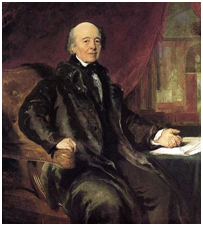
If you were living in a large Stately home in the 1800s and felt it was looking a little tatty there was just one man that you’d be sending your ornately headed writing paper too. That man was John Nash, the house “improver” extraordinary. He was a Handy Andy, Lawrence Llyellen Bowen, Peter Andre 60 minute makeover all rolled into one. Unlike them, however, he would take years to plan out your home and have an army of artisans and workmen in tow. John Nash was the type of guy that would roll up to your Jacobean dwelling, have a wander around it listening to the Lord of the Manor say what they wanted and then Nash would chip in with some ideas of his own. These were usually massively over the top Italianate additions designed to beautify the place. Just look at Witley Court or the Brighton Royal Pavillion to see what we mean.  The Lord would then say “and all for the low, low price off?” And Nash probably would stick a pencil behind his ear, let out a long whistle and say “well…it might cost you a bit but I’ll see what I can do”.

Image credit

Lucky for you then that the Conservatories Cheltenham experts https://www.firmfix.co.uk/conservatories/ can give you a nice conservatory at a great price that will beautify your house a lot quicker and cheaper than John Nash and his Doric columns. Who was this man who rose to such prominence?

Image credit

Nash was born into simple circumstances in Lambeth his Dad being a Welsh millwright. After school was done Nash bagged himself an apprenticeship with the best in the field at the time and got his head down for a year studying the craft of architectural design.  He set up his own practice and began work. He also got married whoever this did not last long and she was packed off to Wales to live with various of Nash’s cousins after she provided him with “spurious children” that weren’t his and racking up debts without telling him and (so that relationship went downhill quickly). This didn’t work as she had a relationship with one Charles Charles (seriously) and had a child with him for good measure. They were then divorced.

Nash gave up on London and he moved to Carmarthen where he found local builders to form alliances with. He set about getting work designing medium to large villas in Wales and he soon got a good reputation. He became friends with Sir Humphry Repton the garden designer but that went south when Repton accused him of ripping off his garden designs. Nash had got some money behind him by this point and returned to try again in London being much more successful this time..

Read Full Article

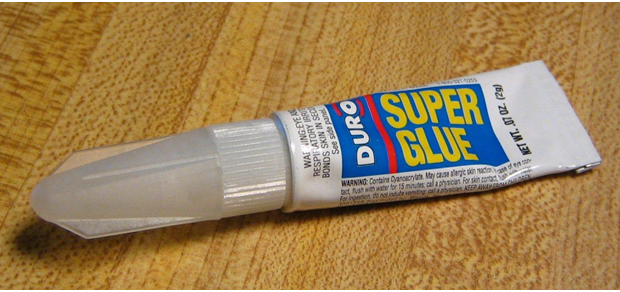
Superglues were the answer to many industrial and domestic problems, but most of us have discovered one of their annoying disadvantages – when they drip or smear onto the wrong surfaces they seem impossible to remove.

Image Credit

There is nothing worse than fixing an item and laying your superglue down perhaps on the window sill and finding that it has dripped all down the new radiator that you purchased from a company like Aluminium Radiators UK. Incidentally, if you are looking for a new radiator take a look at stockists such as apolloradiators.co.uk/designer-radiators who will be more than happy to help you.  Removing superglue from metal surfaces is easier than you’d think and here is one method of going about it.

Instructions

First, protect other surfaces and assemble the tools and materials you need. These are clean lint-free cloth, acetone, a small paint scraper, and a hammer. Acetone is an ingredient in many household products such as nail polish remover, so you can use these instead of pure acetone.

Moisten the glue with the acetone, using a clean cloth to apply it, or you can moisten a section of the cloth and leave it on top of the affected area for 5 to 10 minutes to soak in. The acetone will not dissolve the glue, but will gradually loosen its grip to the metal surface.

Image Credit

Once the superglue has softened, carefully attack it with the scraper, gently tapping with the hammer if necessary. You can also use the hammer to squash the glue as this helps make it malleable, and may even slip it from the surface. If these techniques aren’t sufficient, give the glue raps with the hammer. If it has been sufficiently weakened by the acetone, it will break up and come away.

Finally, clean up the residue. Your acetone laden cloth will remove remaining smears of glue and leave a clean polished surface.

Replacement

A common reason for needing to clean superglues from metal surfaces is because the bond has failed. In order to redo the job, you have to get rid of the old clinging glue. If this is a recurring problem, you need to identify a more reliable adhesive solution.

Fortunately, manufacturers of adhesives usually have them tested by a rating agency that applies standard test procedures (see https://www.astm.org/Standards/adhesive-standards.html). You can get these test results from the manufacturers. Don’t be afraid to contact manufacturers and suppliers direct.

Identifying the best adhesive for your particular job is difficult. Packets in the DIY store rarely display sufficient impartial information. Epoxies are often chosen but have numerous disadvantages, so choose suppliers who provide the best advice.

Read Full Article

Christmas Day for many invokes images of the Queen’s speech. The Queen has made an appearance on Christmas Day TV every year since 1952, bar one occasion. There can be no other living person with such a constant presence in our lives on Christmas Day, other than Santa of course! It could well be that no other monarch in our future will make as many Christmas messages to the people as the Queen has.

The tradition began in 1932, when the Queen’s grandfather, George V began a radio broadcast which he did until his last Christmas message of 1935. There was no broadcast made in 1936 as Edward VIII had abdicated the throne just weeks before Christmas. His successor was the rather reluctant George VI, the Queen’s father. He did not make a Christmas broadcast until 1937, missing the following year and resuming in 1939. The tradition has remained almost annually since that date.

Image credit

Before television, all transmissions were sent out over the wireless, delivered from Sandringham at around 3 pm on Christmas Day. They were all delivered live with one exception when George VI’s final message was recorded in advance due to his poor health. On the Queen’s succession, she continued the same tradition, even sitting in the same seat at the same desk as her father and grandfather had done.

It wasn’t until 1957 that she delivered her first Christmas message on television as well as radio. In 1959, she confined herself to sending the message on the radio as she was heavily pregnant but since then she has appeared every year on television. Initially, the message was broadcast only on the BBC but in 1997 this was changed to alternate between the BBC and ITN. Sky News was also added to this rotation in 2011. Don’t miss her speech this year because of TV troubles. For TV Aerial Installation Cheltenham way take a look at http://steveunettaerials.co.uk/services/tv-aerials-repair-and-installation-cheltenham/

George V’s broadcast was only meant to be a one-off, but it proved so popular that he had to repeat the process each Christmas for the remainder of his reign. It soon became a British tradition that people felt brought the monarch closer to their people and successive monarchs have felt the need to continue George V’s innovative idea. George VI found it particularly challenging as he suffered a serious speech impediment and did not look forward to the live broadcast.

Image credit

The original broadcast of 1932 had been written for the King by Rudyard Kipling. The reason 3 pm was chosen was that it was deemed the best time for reaching the majority of British Empire countries across the world.

Some of Queen’s speech facts

There was no broadcast in either 1936 or 1938.

The tradition was only firmly established when war broke out in 1939 and George VI felt the need to support and reassure the nation.

The only year the Queen has missed a broadcast was 1969. A special documentary had been made that summer about the royal family, so the Queen decided they’d been on TV enough that year and issued a written message instead.

The speech is now available on the radio, on television, the internet, in HD and on the Royal Channel on YouTube.

The Queen writes her own messages within a religious framework and a focus on current events and issues. It is one of the only times we get to hear the Queen’s views and she doesn’t need to turn to the government for advice.


Read Full Article

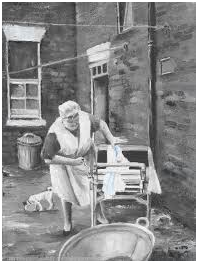
In the Victorian era keeping the water hot fell to the task of the Wash Copper boiler. This was an essential part of the modern household kit at the time even into the 1900s.  Without the Wash copper, you would not have had any access to hot or boiling water. Most of them were used for cleaning and washing.

Image credit

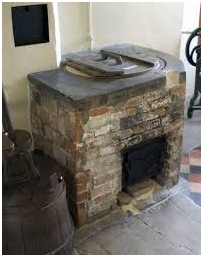
There were two types available to the Victorian housewife. In older homes, the Wash copper wash built into a utility room or kitchen safely sealed away behind a tough brick exterior.  The lid was either a copper one or some thick wood. The coal or if it was a more modern version gas or oil burner had some access via a metal gate cut into the brickwork where the fuel could be placed or ignited. Copper is an excellent conductor of heat so the water would soon be nice and warm or at boiling after a relatively short period of time.

Image credit

The other type of copper boiler was one that could be lugged around the house wherever it was needed. Although the brick version was safe it was static meaning that you had to carry the water around in tin bucket or you washed the items there. The heat from the boiler could be intense, hence the brickwork and the mobile copper were the same. It had an enameled surface to protect and insulate the copper wash inside and this meant that it gave off pleasing warmth that it was apparently nice to rest an aching shoulder against it.

More expensive versions contained a tap or even a system that could vent off the steam into a flue. If it was a hot summer’s day this was a bit of a blessing. If the copper was used just for washing the family’s clothes the whole lot was dumped into the copper wash and “spun” around using a washing dolly. This was a stick with feet on the end that could turn the washing around. It was also used to extract the clothes so that they could be dried through a mangle.

Great care was taken to ensure that the copper wash was kept clean and tidy. Just as you would look to a Boiler Repair Gloucester business through a company like www.hprservicesltd.com/gloucester-boilers/boiler-repair-gloucester/,  the copper was monitored for rust and grease. It was such a vital part of the house that nothing detrimental could be allowed to happen to it.

Read Full Article

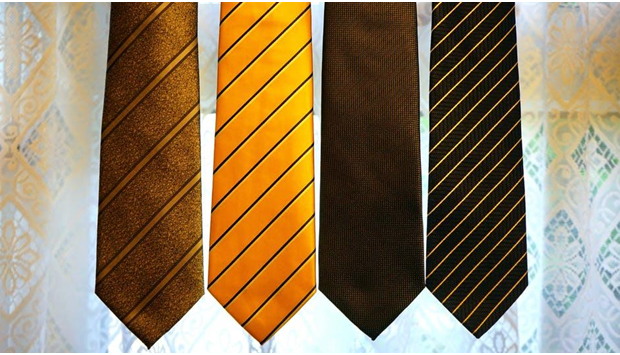
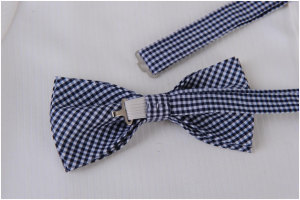
Whilst ties may be used for formal occasions, and many men (and women) despise wearing them, there’s no denying a well-chosen tie can make your entire outfit. What’s more, you can actually use your tie to show off a little bit of your personality through the design. Here are some of the more popular tie designs and what they say about the wearer.

Image Credit

1. The classic striped tie

Nothing can beat a classic, and that’s your motto! You have deep-rooted gentlemanly values and place a huge focus on order and organization. Striped ties are most common for uniforms and can be linked back to the military where they would represent the wearer’s regiment. This may depict your role in the army as to whether you are infantry based or perhaps a tank driver. You may even enjoy some Tank Driving Days from companies such as  https://www.armourgeddon.co.uk in your spare time. Whilst some may consider you strict, you see it as being traditional and focused on your goal. Either that or you’re actually a rugby lad living your best life with the tie worn adamantly around your head.

2. The geometric pattern

Typically reserved for people who have a mind for IT or technology in general, the geometric pattern is often accompanied by bold colors. Quite often, the pattern itself is associated with being a ‘geek’ – although despite the seemingly negative connotations, the majority who are branded with this title wear it proudly! The reason being, those who favor this pattern are generally logical and forward-thinking, but with a love for innovation.

Image Credit

Regardless of your choice in tie patterns, there will be a shirt to match it perfectly.

3. Paisley

This one is for those who stand out, both in terms of personality and fashion. This pattern originates in Persia and has become closely associated with the Boho scene, so you’ll often see it adorning the necks of those who love everything vintage and aesthetic.

Despite the tie being largely dropped and replaced with the more casual open buttoned shirt and blazer, many still feel that ties are essential to complete a suit. Indeed, it can’t be denied they bring a certain class to the outfit, and often make it much better!

4. Animal print

Simply put, you’re fun and light-hearted and don’t take anything too seriously. You exude positive vibes and are undoubtedly unique.

Read Full Article

Although the vast majority of HVAC systems are based on similar main components – a heat source, cooling unit, blower, and ducts – these units can be packaged in different ways and there are many system enhancements. Here are some of the common terms and elaborations you are likely to encounter.

Image Credit

Air handler unit (AHU)

The AHU is usually a metal enclosure containing the major system components, such as the heating and cooling coils, blower, filter racks, sound attenuators, and airflow regulators. Many AHUs are located inside a building. An outdoor unit is often called a ‘package unit’. When designed for the roof, it is called a ‘rooftop unit’.

The plenum

The plenum is a kind of spaghetti junction that directs airflows. That sounds simple enough, but it is a critical part of an efficient HVAC system and requires careful design. A supply plenum channels outbound air from your AHU to the different zones or rooms that need warm, cool or freshened air. A return plenum receives air from return grilles and directs it back into the AHU.

Image Credit

Ducts

Ducts are air-tight channels that conduct air from the supply plenum to the outlet grilles. Ducts also collect and return ‘spent’ air. It is the balance of air inflow and outflow that enables the system to work efficiently.

Although ducts can be manufactured in many shapes and materials, the most common is galvanized spiral duct. This offers excellent weight to strength ratio, is easy to work, join and bracket, and is available from suppliers such as https://www.dustspares.co.uk/ductwork-parts/galvanised-steel-spiral-duct.html.


Image Credit

Duct fittings

Controlling airflows to take different routes through a ducting network is a specialized skill. Specific fittings help to maintain the balance, including cells, tees, reducers and vent caps. Fittings that split airflow from the main duct into branch ducts are particularly important.

Dampers and diffusers

Dampers are like valves and enable the airflows to be adjusted. They can be manual, remotely controlled or automated. Fire dampers seal ducts automatically if smoke is detected. There are also special dampers to measure airflows, prevent backdrafts, and for other specialized purposes.

Diffuser grilles are often fitted internally to keep airflow uniform, avoiding warmer air separating from cooler and preventing inefficient eddies.

Vents

Room outlets include grilles, diffusers and register boxes. They are carefully designed to distribute outflow evenly in the optimum direction(s) and with minimum noise.

Read Full Article

There are lots of brilliant football kits floating around, from the timeless and barely changing England all white to West Germany’s 1990 simple stripe and classy single-color USSR and Netherlands kits from the 70s and 80s. But for every kit memorable in a good way, there is at least one you wish you could forget about completely. However, once you have seen some of these kits there is no forgetting them.

Image Credit

These are some Football Kit trends that we hope not to see again. Make sure that you order your Discount Football Kits from a reputable supplier such as www.kitking.co.uk to ensure your team doesn’t end up on the worst dressed list.

Terrible 1970s Wallpaper

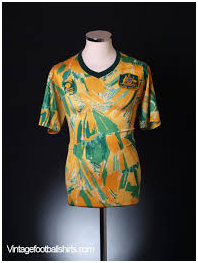
As recently as the 1990s, wallpaper patterns that, luckily, went out of fashion decades before were being revived for top-flight football team kits. Thankfully this is not a trend that has returned. Australia’s 1990 kit is a great example of one that we hope will never see again, with an eye-watering impressionist pineapple pattern.

Scunthorpe’s 94/95 away kit is another example, featuring blue and yellow blotches on a red pinstripe, and invoking feelings of utter disgust in the viewer.

Lastly comes Norwich City’s 93/94 home kit, which strongly resembles a yellow and green version of a London Underground seat.

Image Credit

‘Natural’ Prints

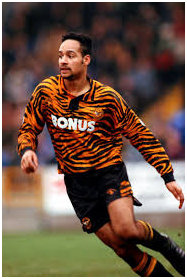
Referred to by one commentator as the ‘Hull City Disaster’ is Hull city’s 92/93 tiger stripe kit, which is the sort of thing you wouldn’t even see on a Geordie Shore repeat.

This doesn’t end with terrible animal prints or in the 90s, though. Spain’s Deportivo Palencia went with an incredibly creepy flayed muscle kit starting in 2016, which may not be the ugliest kit on this list, but it is just strangely anatomically correct.

Along similar lines but a bit more stylized, we have Italy’s Reggina, which has been using male torso kits since at least 2012. A few years back, they may have resembled a cheap novelty shirt, but they have progressed to something much more stylized but still strangely anatomical.

Eye-Watering Test Patterns

Lastly, we’ll come to those kits that evoke feelings of television not quite getting a signal, with static and flickering images. No kit quite embodies that aesthetic like Norway’s 1996 away kit, complete with 1980s-era text effects and actual static.

Eastern Europe’s fashion sense might have been impaired slightly by communism, but that can’t excuse Estonia’s 1996 kit, which had not one but two horrible clashing patterns.


Read Full Article

The popularity of the sweatshirt spans all social backgrounds and generations, and it’s a staple in most people’s wardrobes. But how did this iconic design develop? Well, it all started in Alabama, in the 1920s, with someone called Benjamin Russell.

Image Credit

Similar to its cousin the hoodie, the roots of the sweatshirt lie in American sports. Benjamin Russell owned a women’s and children’s undergarment factory, and one day his son, Bennie Russell, came to him with a problem. Bennie played American football and had become frustrated with how uncomfortable the wool jerseys worn by the players were. Using women’s underwear material as an alternative, Benjamin began developing a softer, more comfortable top.

Image Credit

The popularity among the football team was immediate and the design was quickly adopted by both football and baseball players across America. The sweatshirt design shortly became intrinsically linked with American sport and comfort. If you’re wondering where the name came from, it was coined by factory workers who commented on the state of the garment post-game!

The triangle

Since their inception, sweatshirts have featured a triangle shape on the front collar. The technical name for this feature is the ‘V-insert’ or ‘V-stitch’ – this is a piece of the cotton jersey that’s ribbed or a piece of material that’s elasticized, as is often used in waistbands. Originally, the use of it in a sweatshirt was designed to collect sweat around the neckline and chest while exercising.

Aside from its practical use, the V-stitch also helped control the amount of stretch around the sweatshirt’s neckline when putting it on and taking it off. Nowadays, with modern improvements in fabric design, the triangle is more of a design feature than a technical one. Modern tops like the Farah sweatshirt https://www.ejmenswear.com/men/farah/sweatshirt are inspired by tradition but feature modern design techniques.

Loopback

Sweatshirts commonly contain a particular knit on the underside that features loops, known as “loopback”. The name derives from “loopwheel”, a machine that was traditionally used to knit the fabric. Early versions of the loopwheel reduced the knit’s tension, but modern methods now create the pattern from two yarns and ensure it’s tightly knitted. This means the tops are more resistant to getting bobbles (known as “piling”) as they age. The loop pattern was originally designed to ‘wick’ sweat away from the body and keep it cool.


Read Full Article

Moving to a new home can be a major upheaval, so it is good to know that with some forethought and planning this task can be accomplished with minimal fuss. Thinking ahead can also help you to reduce the cost of moving too. If you have used a reputable Landlord or estate agency they are bound to of checked the property with property inventory software from inventory base or similar before you even move in so this should one less thing to worry about. This kind of software is called a Property Inventory App and can be very useful, particularly for those looking to rent out their properties.

Image Credit

Make a plan

Don’t leave everything until the last minute. Put the day for the move in your diary, and then start working towards it. Think about what needs to happen for this to go smoothly, such as reserving a parking spot for your movers. If necessary, make a list.

Start Packing

Start packing when you know that you are moving. Obviously, pack the things you need at least first. You will be surprised how much stuff you can pack away while still going on with your life.

Label everything

Label the boxes so you know what is in them when you come to unpack.

Image Credit

Get the keys

Make sure everything is ready on the day itself so the whole process is as seamless as possible. Also, make sure that you have the key to open the door of the new place as you don’t want to be stranded on the road surrounded by boxes. For more ideas on how to make moving less unsettling, see this report from The Guardian.

Unpack

When you arrive at your new residence, unpack. You will know which boxes to unpack first thanks to your detailed labeling. The most important boxes to unpack first will contain items such as plates, towels, and bedding.

Get help

Moving everything on your own will be hard work, so also plan to get some support, such a man with a moving van. Book your man well in advance so this is organized, and you will probably get a better price for the service too. If you are thinking about using a man and van service it would be a good idea to consult local experts.

The company will be able to give you all the advice and guidance you need when booking their services.

Moving can be tiring, but some planning can really make the whole process a lot easier. The key to a successful move is being organized. Think ahead, make lists and where possible delegate to others and moving should go off without a hitch.

Read Full Article